
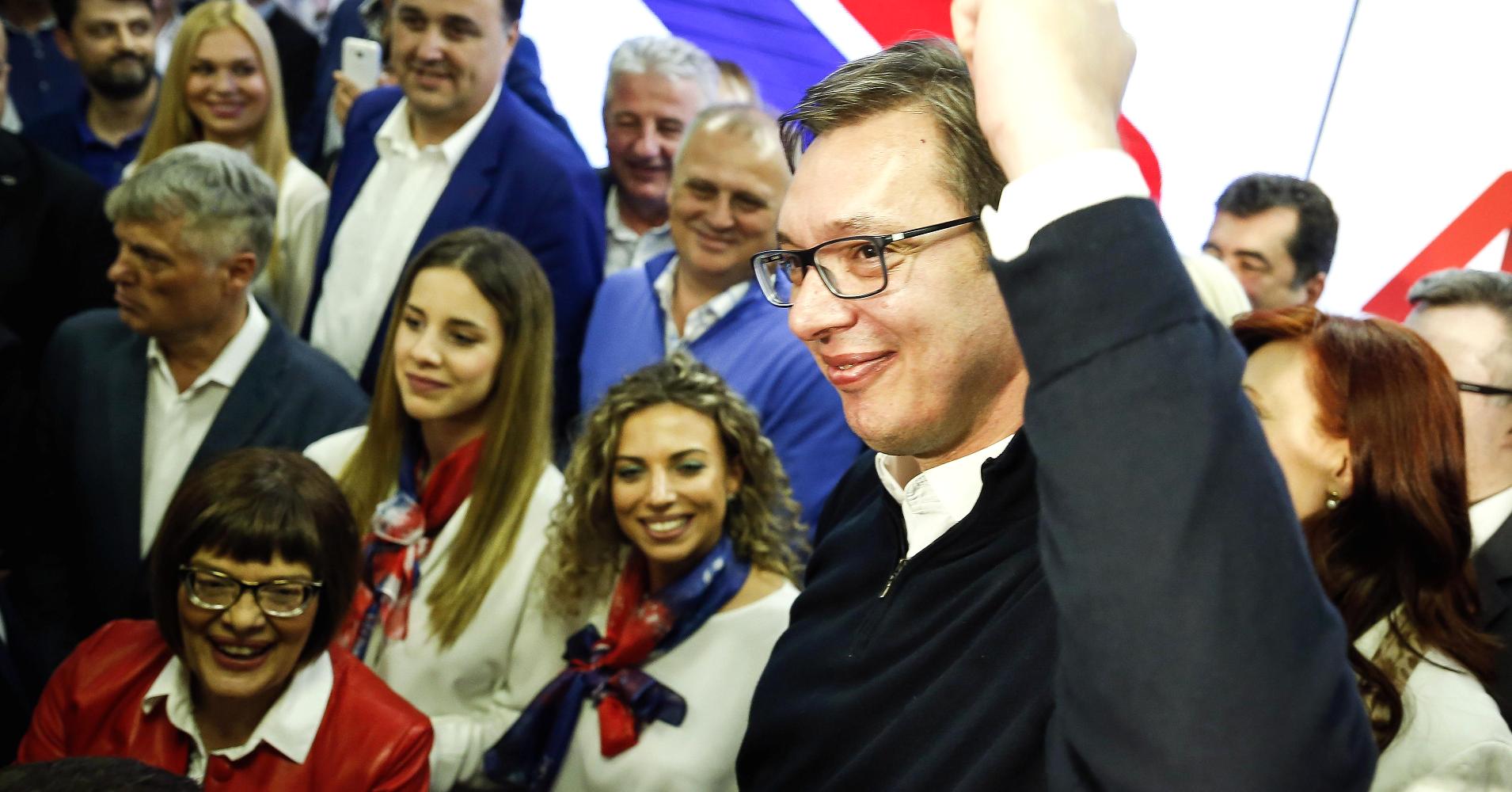
Vucic’s opponents, however, say he has an authoritarian streak that has led him to take control over the media in Serbia since his party rose to power in 2012 and he became prime minister three years ago.
He denies the charge but has struggled to shake it given his record when last in government in the dying days of Yugoslavia.
Then in his late 20s, Vucic was Serbia’s feared information minister behind draconian legislation designed to muzzle criticism of the government during the 1998-99 Kosovo war.
“If there’s no second round, that means we live in a society that is politically immature,” sociologist Jovo Bakic told N1 television. “Where else do you not get a second round? In North Korea.”
Twenty-five-year-old student Luka Maksimovic, who ran as a white-suited parody of a sleazy political fraudster called Ljubisa “Beli” Preletacevic, came third with just over nine percent, picking up the votes of Serbs disillusioned with the country’s political class.
“I voted for Beli,” said 30-year-old Dejan Markovic, an unemployed metal worker. “The so-called opposition candidates have betrayed us in the past and Vucic is lying to us all now, so Beli is the only way to mock all this hypocrisy.”
As president, Vucic will have few formal powers, among them the right to send legislation back to parliament for reconsideration.
But he is widely expected to appoint a loyal ally as prime minister and try to keep a tight rein on policy, as former President Boris Tadic, then of the Democratic Party, did between 2004 and 2012.
Some analysts said that could prove difficult. “Vucic will now be distanced from everyday policy-making and executive affairs and will have to rely on a proxy,” Eurasia Group wrote on March 30.
“This will likely generate some tensions in the chain of command.”