

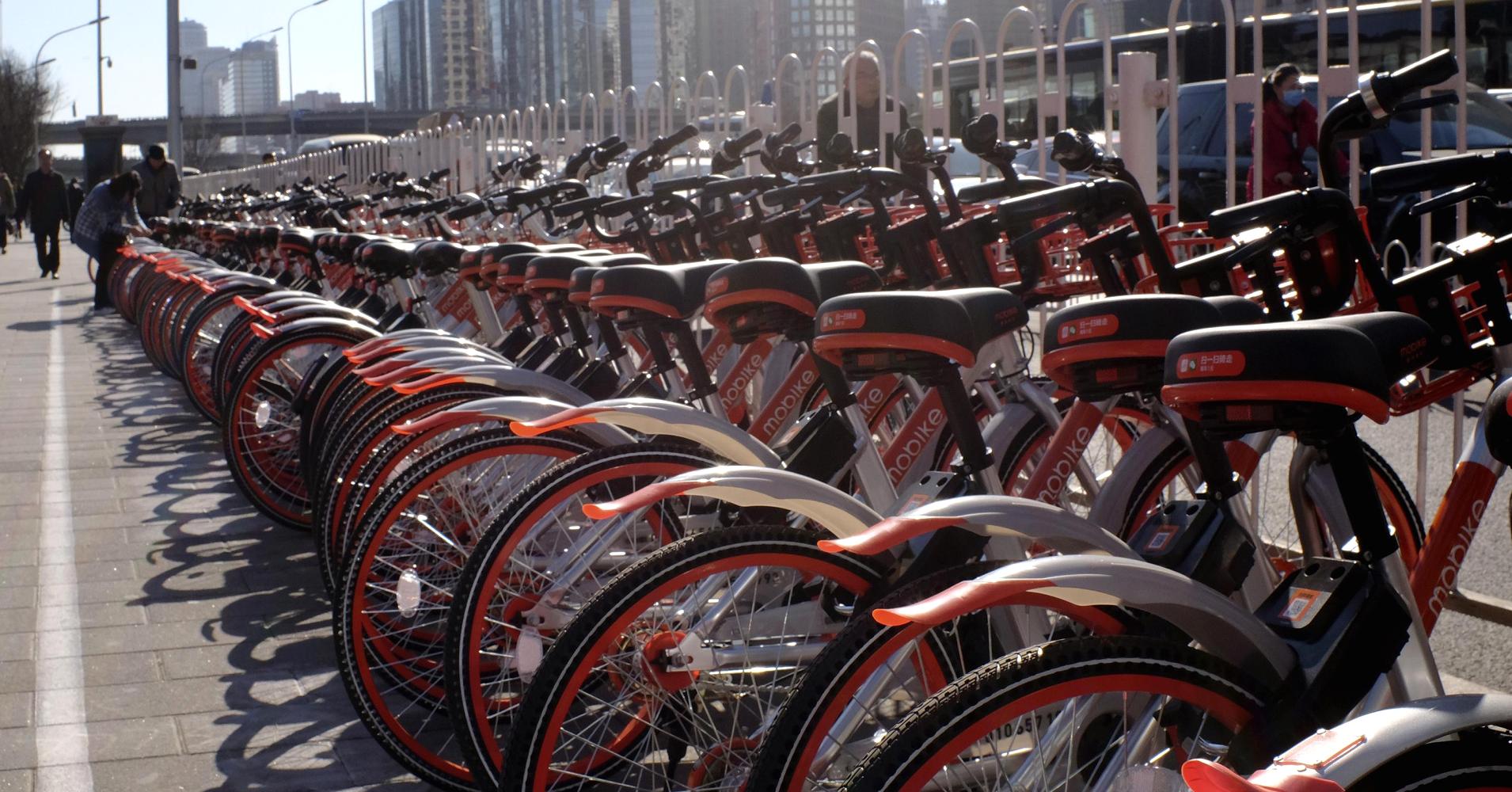
The bikes are solving some urban challenges, making it easier for pedestrians to get around, and even reducing transport pollution. Mobike says its bikes have helped to cut nearly 200,000 tons of carbon emissions.
But in an ironic twist, the two-wheelers are now starting to create their own traffic jams, with unused or broken bikes stacked high on sidewalks and street corners. Still, they’re convenient because, unlike other bike-share programs, riders can grab them and drop the bikes off anywhere in the city — not just at designated docking stations.
In the long run, the firms are collecting plenty of data on China’s young consumers — where they go, when they travel — and that could be worth a lot to companies looking to market to that crowd.
As the stakes rise, both companies are trying to court more backers — Apple’s Tim Cook even stopped by Ofo’s Beijing offices about a week ago. But Mobike seems unruffled about the visit, and its rival.
“No, I’m don’t feel worried,” Wang said.
Ofo couldn’t immediately be reached for comment for this story.
—Barry Huang contributed to this report.






