

Noorullah Shirzada | AFP | Getty Images
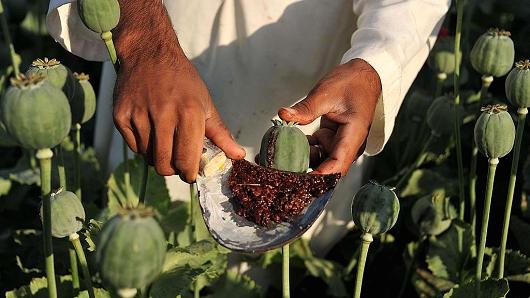
An Afghan farmer collects raw opium as he works in a poppy field in Khogyani District of Nangarhar province on April 29, 2013.
A problem that Afghanistan and international governments have tried to eradicate for decades is only getting worse, and China is a big reason why.
Last week, Afghanistan released new data showing opium production is surging, information that dovetailed with a widely circulated 2016 United Nations Office on Drugs and Crime (UNODC) report that showed similar findings. The primary problem is a new strain of genetically modified seed that comes from China, which allows poppies to be grown year round. The so-called Chinese seeds began appearing in 2015, according to the UNODC, leading to a massive 43 percent surge in production last year.
According to separate data from the Institute for War and Peace Reporting, the growth cycle of opium in Afghanistan is now around two months, when it used to take three times as long to grow the crop and process it into heroin.
“We are aware of the new seed in town,” Afghan government spokesperson Javid Faisal told CNBC in an interview. The war-torn country is working to gather more information about the new opium seed, and the government is in “search to find ways to avoid its traffic,” Faisal added.
Although the plants are farmed legally for pharmaceutical purposes in China, the appearance across the border in Afghanistan has exacerbated a long-running headache for Afghan officials. For years, the country and international organizations have struggled to contain the ceaseless cultivation and multi-billion dollar sales of opium, widely considered to be Afghanistan’s biggest source of economic activity.
The Afghan government said most of the opiate produced within the country is being sold in the global drug market, with Russia and Pakistan absorbing much of those exports. Europe is also a prime destination, as is North America. More than 47,000 people died from prescription and illegal opioids overdoses last year, according to the CDC report.





