

Susana Gonzalez | Bloomberg | Getty Images
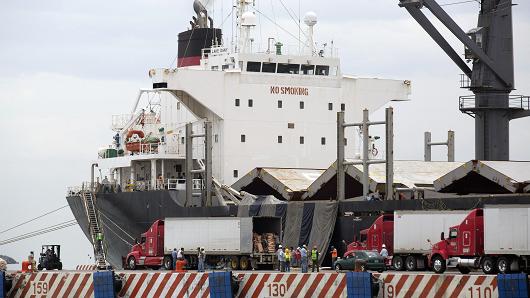
A line of trucks wait for sugar to be unloaded from a vessel at the Port of Veracruz in Veracruz, Mexico, on Thursday, Aug. 29, 2013.
The so-called ‘suspension agreements’ reached in December 2014 prevented a trade war and established price floors and limits on the types of sugar that Mexican producers can send to the U.S., putting an end to free trade of the product under the North American Free Trade Agreement (NAFTA).
Both countries were in talks to renegotiate the deals, but they ended when former U.S. President Obama left office in January and Cortina said there is no set date for restarting talks.
Still, he warned that if the U.S. cancels the agreements, Mexican sugar producers will insist that the Mexican government halt fructose imports from the U.S.
The U.S., Mexico and Canada are expected to renegotiate NAFTA, spurred by current U.S. President Donald Trump, and sugar will be a critical part of the talks.
Cortina said that if sugar is dropped from NAFTA, the U.S. will suffer more because Mexico is the only market for its fructose.





