
Markets are vulnerable to a surprise from the Fed, even though the meeting minutes it will release Wednesday are pretty stale.
Traders aren’t expecting much reaction to what should be old news. But the risks are two way – the Fed could sound surprisingly dovish, counter to the recent statements of some Fed officials. Or on the other hand, it could sound more hawkish than the statement it released after that meeting on Feb. 1, where it held interest rates steady.
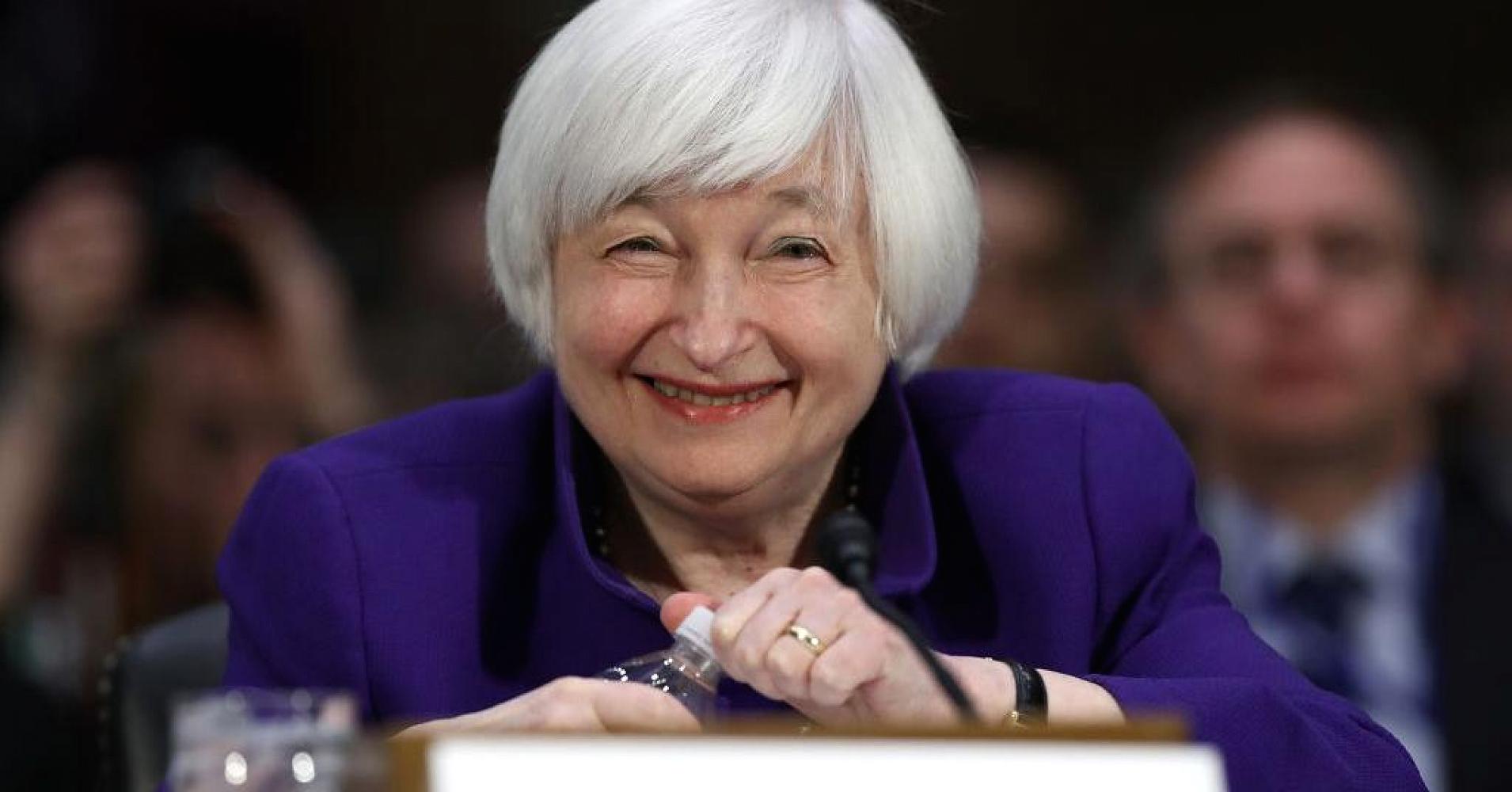
Earlier in the month, that Fed statement combined with some soft wage data in the January jobs report squashed already low expectations for an interest rate hike in March. But expectations picked up slightly after Fed Chair Janet Yellen sounded more hawkish and confident about the economy in recent testimony. She stressed that March is on the table, and every meeting is live. Stronger inflation and other data also strengthened the case, and while expectations nudged slightly forward, most economists believe the next rate hike will come in June.
But other Fed officials have also been making more hawkish comments, and on Tuesday the dollar rose after the latest comments from Philadelphia Fed President Patrick Harker and Cleveland Fed President Loretta Mester who said the Fed could raise rates in March. As stocks rallied to new highs Tuesday, Treasury yields rose, but the market move was subdued and not signaling an upcoming rate hike.
The Fed releases the minutes at 2 p.m. Wednesday. Other data Wednesday includes existing home sales at 10 a.m.
Tom Simons, Jefferies money market economist, said he’s looking at the Fed minutes specifically for comments on the outlook for inflation and anything else that could shape a rate hike decision. “Since that meeting, we’ve seen some pretty spicy CPI numbers, and we’re probably going to see a pretty decent PCE deflator as well,” said Simons. While the consumer price index came after the Fed meeting, Simons said he’s hoping to see more details of how Fed officials were leaning.
“I think there’s a lot of good arguments for raising rates in March. The only argument against it is they haven’t expressly told us they’re going to,” he said. “It seems to me the discourse among regional bank presidents at this time and the chatter about March is a little bit more cohesive than the warning shots they’ve given us in the past that proved to be red herrings.”
Deutsche Bank chief U.S. economist Joseph LaVorgna does not expect the Fed to signal a hike for March in the minutes, and in a note he said there were still relatively low market odds for a March move.
“We have consistently placed the probability much lower, because Fed policymakers will not have the Q1 GDP report at the time of their meeting and the specific details of a potential fiscal stimulus package will likely not be known. Finally, despite an upward surprise in the January CPI data, inflation pressures are generally muted. Nevertheless, we expect the FOMC minutes to paint a relatively upbeat picture of the economic outlook but stop short of strongly signaling a March rate hike,” he wrote in a note.
Strategists say after the Fed minutes, the market will be looking ahead to the release of President Donald Trump’s tax plan, expected by many to be released in his speech to Congress Feb. 28.
The market has been watching for a reaction from Trump on the border adjustment tax aspect of the House tax plan, which already has opposition in the Senate. The border adjusted tax would place a 20 percent tax on all imported goods and no tax on exports. Supporters say it is the best way to raise revenue for the tax cuts — $1 trillion over 10 years. It also would allow congress to cut the corporate tax rate to 20 percent from 35 percent.
But opponents say it may not work as smoothly as some expect. The border adjustment tax supposedly would send the dollar up by 25 percent, but some economists worry it will not be a smooth ascent and it will end up creating price inflation as companies raise prices. Corporate America has come out on both sides of it, with retailers and other importers lining up against it, and industrial and manufacturing companies favoring it.
“There might be some expectation already embedded in the market that there’s going to be something like this,” said Brian Dangerfield, macro strategist at NatWest Markets. “It’s not clear how the market is going to react to it.” He said if it turns out to be in the Trump plan, it could signal a more likely scenario that it could become law.
Art Cashin, head of floor operations at UBS, said a concern is that Trump could propose a plan that would add to the deficit and that could then run into opposition from Tea Party Republicans. “If they shut him down, [stocks] won’t like it,” he said.
As of now, the stock market is trading on the prospect of stimulus and higher growth. But the 10-year is looking at the prospect of continued easing in Europe and a bit of a flight to safety due to the French election, Cashin said. The 10-year yield was at 2.42 percent in late trading Tuesday.
Stocks ended Tuesday’s session at record highs. The Dow, S&P 500, Nasdaq, Russell 2000 have all scored double digit gains since the election, with the Dow and Nasdaq up 13 percent and the Russell 2000 up 18 percent. The S&P is up 10.5 percent. The S&P closed at 2365, up 14 Tuesday.
Besides the Fed minutes, there are two Fed speakers Wednesday. Dallas Fed President Robert Kaplan discusses issues facing the nation and the global economy at a Dallas Fed event at 7:05 p.m. ET. Fed Gov. Jerome Powell speaks at 1 p.m. in New York at the Forecasters Club of New York on the economic outlook and policy.
Earnings are expected before the bell from Bayer, Host Hotels, Dish Network, TJX Cos, Southern Co, HollyFrontier, Toll Brothers, Six Flags, Garmin, Chico’s FAS and Wolverine Worldwide. Companies reporting after the bell include Tesla Motors, HP, L Brands, Public Storage, Fitbit, Cheesecake Factory, Boston Beer, Sunoco Logistics and Transocean.