

“Just a couple of weeks ago, Washington imposed additional unilateral sanctions on Iran for a similar missile test, so we have to assume that Trump will do something,” Newton said.
The idea of secondary sanctions, involving punishment against Chinese banks funding Pyongyang, has been floated as a possible option but Newton doesn’t believe that will materialize.
“The positive call [with Xi] means Trump is more prepared to work with China rather than lash out,” he explained. “It will be interesting to see what China will do. We may be going to the UN with this issue.”
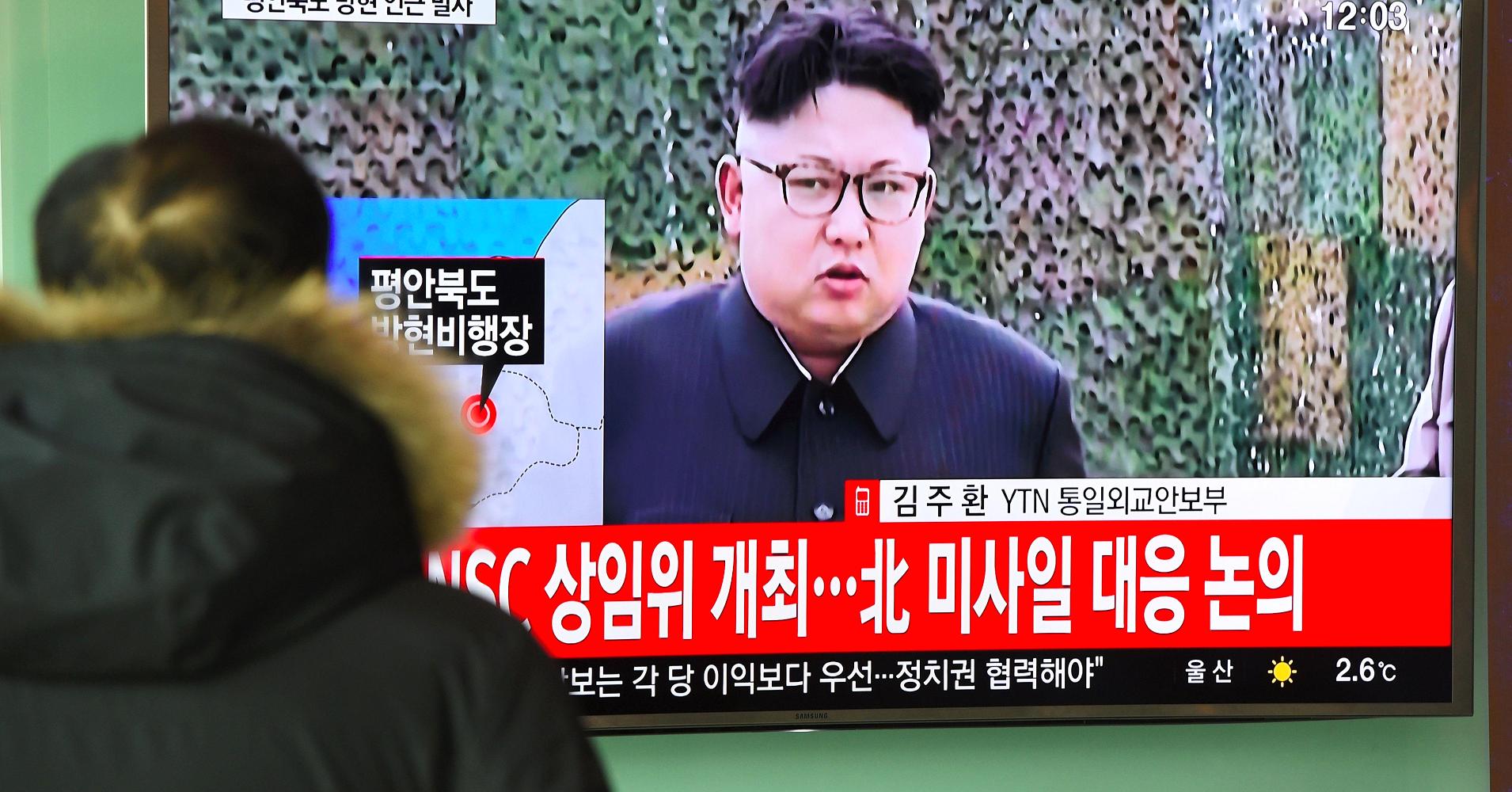
Sunday’s launch did not take the world by surprise—such an incident was widely anticipated based on North Korean leader Kim Jong’s recent threats to test an intercontentinetal ballistic missile (ICBM). But because the weapon launched wasn’t an ICBM, experts said the incident didn’t provide any additional insight into the rogue nation’s nuclear program.
“The launch was predictable, even inevitable,” Michael Hayden, a retired U.S. Air Force general and former CIA director, told CNBC. The move was a means for Kim to re-assert his authority as Trump and Abe held talks, Hayden added.
Pyongyang is widely expected to conduct further weapons tests in the coming months. Seoul and Washington are due to hold joint military exercises at the end of the month, while North Korea will celebrate the birthday of Kim Il Sung, the nation’s founder, on April 15—both annual events are typically marked by demonstrations of Pyongyang’s military might.
The pariah state has conducted five nuclear tests since 2006—two of which took place last year, including an alleged hydrogen bomb trial—that sparked numerous sanctions from Western governments. The country has never successfully launched an ICBM.
—CNBC’s Sri Jegarajah contributed to this report.






