

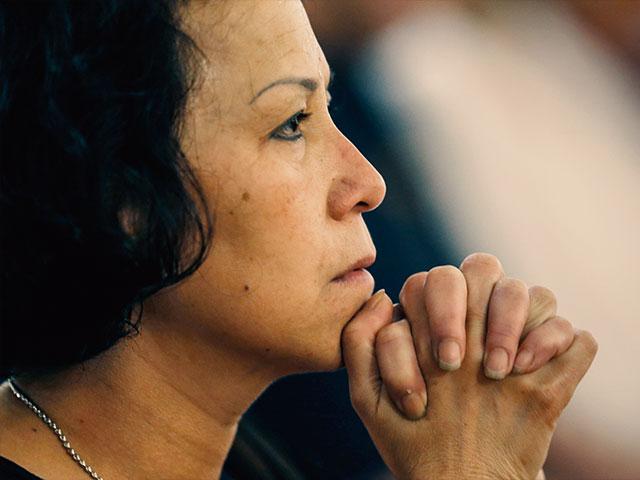
This week has been dubbed Racial Reconciliation Sunday by the Southern Baptist Convention.
“The previous year was a painful one for many in our churches. That pain was often profoundly racialized. Too many families grieved the loss of a son, a husband, a father or brother who was gunned down. Too many children have cried themselves to sleep at night fearful for their mother or father’s safety simply because they wear a badge,” writes Matthew Hall, dean of Boyce College and research fellow with the SBC Ethics & Religious Liberty Commission.
“We have witnessed a presidential election that too often drew out the worst in us, that deepened our divisions and animosities, even within our churches. And too many of us have been too quick to point out the speck in our brother’s eye, without recognizing the log in our own, succumbing to the drug of self-righteousness,” Hall continues.
Hall says that racial reconciliation won’t happen on its own and he calls on the church to set an example.
“In an age marked by incivility and polarization, what if the church led the way in love? When it comes to pursuing racial reconciliation, we may not always agree on the right step to take next. We will misunderstand one another and even offend one another. And quite often, our hearts will break as we walk the path of reconciliation.”
Here are five facts you should know about the SBC and its efforts to reconcile all races within the Kingdom of God, compiled by the SBC Ethics and Religious Liberty Commission.
1. In 1814, Baptist churches in the U.S. joined together to create the General Missionary Convention of the Baptist Denomination. By 1845 the churches were divided over the issue of slavery. As church historian Miles Mullin explains, Baptists in southern states desired to make slavery a non-issue, while abolitionist forces in the North (and among northern Baptists) desired the convention to take a moral stand against it. The following year group of representatives from Southern churches created a new denomination, the Southern Baptist Convention. Despite having been founded on racial division, the SBC has become increasingly racially diverse. Today, there are more than 3,500 Southern Baptist congregations that identify as predominantly African-American, comprising about seven percent of all SBC churches.
2. In 1995, on the denomination’s 150th anniversary, the Convention voted to adopt a resolution on racial reconciliation that apologized for its racist roots, for condoning and perpetuating individual and systemic racism, and committed to eradicate racism in all its forms from Southern Baptist life and ministry.
3. At the 2009 SBC annual meeting tasked an Executive Committee study group to examine “how ethnic churches and ethnic church leaders can be more actively involved in serving the needs of the SBC through cooperative partnership on the national level.” After two years of study, the committee released their report, A Review of Ethnic Church and Ethnic Church Leader Participation in SBC Life. The committee recommended that:
– entities annually submit a descriptive report of participation of ethnic churches and church leaders in the life and ministry of each entity.
– the SBC President’s Notebook given to each newly elected president encourage him to “give special attention to appointing individuals who represent the diversity within the convention, and particularly ethnic diversity” among his appointees to various committees.
– the SBC president report the total number of appointees that represent the ethnic diversity when names for committees are released to Baptist Press.
– the SBC President’s Notebook encourage the president to encourage the selection of annual meeting program personalities that represent the ethnic diversity within the convention.
– the Committee on Order of Business consider the ethnic identity of program personalities for annual meetings.
– the Committee on Nominations form be amended to provide a place where a nominee may indicate his or her ethnic identity.
– the Committee on Nominations include in its annual report the number of individuals among its nominees that represent the ethnic diversity within SBC life.
– entities give due consideration to the recruitment and employment of qualified individuals who reflect well the ethnic diversity within SBC life.
– the Executive Committee, through its various publications and news outlets, continue to provide news coverage of interest to individuals of all ethnic interests and to highlight what God is accomplishing through Baptists of “every tribe and tongue and people and nation.”
– the Executive Committee receive a report from EC staff each year during its February meeting concerning the participation of ethnic churches and ethnic church leaders in SBC life.
4. At its annual convention in 2012, the SBC elected as president Fred Luter Jr., the first African American to hold the position. As ERLC president Russell Moore said at the time, “A descendant of slaves elected to lead a denomination forged to protect the evil interests of slaveholders is a sign of the power of a gospel that crucifies injustice and reconciles brothers and sisters. The election of Fred Luter doesn’t mean the question of racial justice is settled for Southern Baptists, but it is one small step toward our confessing that Jesus Christ and Jim Crow cannot exist in the same denomination, or in the same heart. One has got to go.”
5. In 2015, twenty years after the original racial reconciliation resolution, the SBC adopted another resolution vowing to “rededicate ourselves to the holy responsibility and privilege of loving and discipling people of all races and ethnicities in our communities.” The resolution urges churches to demonstrate their heart for racial reconciliation by seeking to increase racial and ethnic diversity in church staff roles, leadership positions, and church membership, and also calls on Southern Baptist entities and Convention committees to make leadership appointments that reflect the racial and ethnic diversity of the body of Christ and of the Southern Baptist Convention.






